Building Managers & Staff
Straight answers for owners, property managers and building engineers, without the trade jargon. Find what to ask, what to schedule and what to keep on site.
The managers book
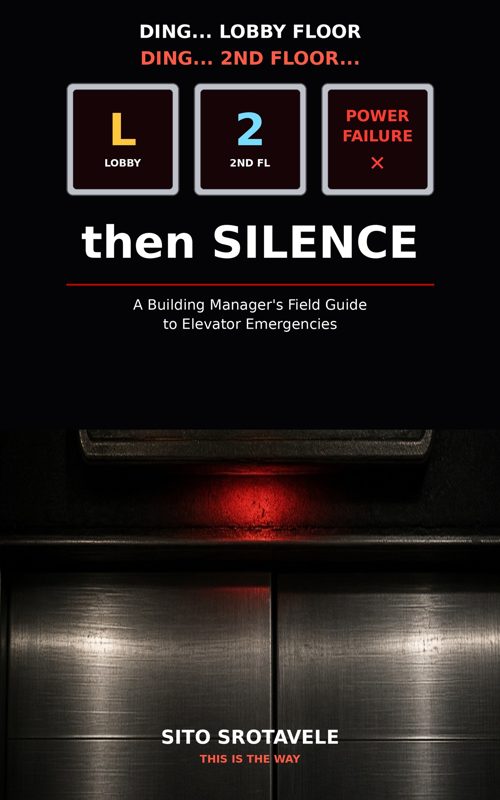
Ding... Lobby Floor, Ding... 2nd Floor... then Silence
A Building Manager's Field Guide to Elevator Emergencies, by Sito Srotavele.
A field guide in plain words for managers and building staff. It covers what to do in the first minutes when a car stops with people inside, who to call, and what never to try yourself. It also covers contracts, records, inspections, outages and fire service.
Ride the escalator
Each level is one group of topics. Guests can read every topic on Level 1 · Start here and see all titles. Members open everything.
Keys: ▲/▼ arrows ride one level when the escalator has focus, 1–7 jump to a level. Hold the handrail, face forward, and step off promptly. Safety First.
Level 1 of 7
Start here
Costly escalator parts: why repairs take time
Most of an escalator is hidden inside the truss. See it opened up on Inside the Escalator. Many of its parts are costly escalator parts, and big repairs take time for the same few reasons:
- Labor hours to get in. Floor plates come up and many steps come out, one at a time, before work on chains, tracks or the main drive can even start.
- Heavy rigging. Motors, gearboxes, the main shaft and chains are lifted with hoists, often with extra crew.
- Parts lead time. Step chains, handrails, gear parts and controller boards are often made to order or are maker-specific.
- Testing and inspection. Safety devices are re-tested after the work, and some repairs need a witnessed test before reopening (please verify with your local authority).
- Downtime. Major work can keep a unit down for days or weeks. Plan barricades, signs and other routes for riders.
For your building, ask for written quotes that separate parts, labor hours and testing.